



There are few children’s bookshelves that haven’t been touched by the imagination of Oliver Jeffers. The beloved artist, author, and illustrator has spent his career creating worlds that are whimsical, wonderfully imperfect, and often far more profound than they first appear.
From his own celebrated picture books to illustrating the modern classic The Day the Crayons Quit, Jeffers has a way of reminding both kids and grown-ups that some of the best ideas begin simply by looking at the world a little differently.
It’s quite fitting for his latest project too. Jeffers recently teamed up with Trainline and Yoto on a collection of travel-inspired audio draw-alongs designed to turn train time into creative time for families. Inspired by everything from mountain trains and bustling cities to beaches and underwater worlds, the screen-free prompts encourage kids to look out the window, pick up a pencil, and let their imaginations take over.
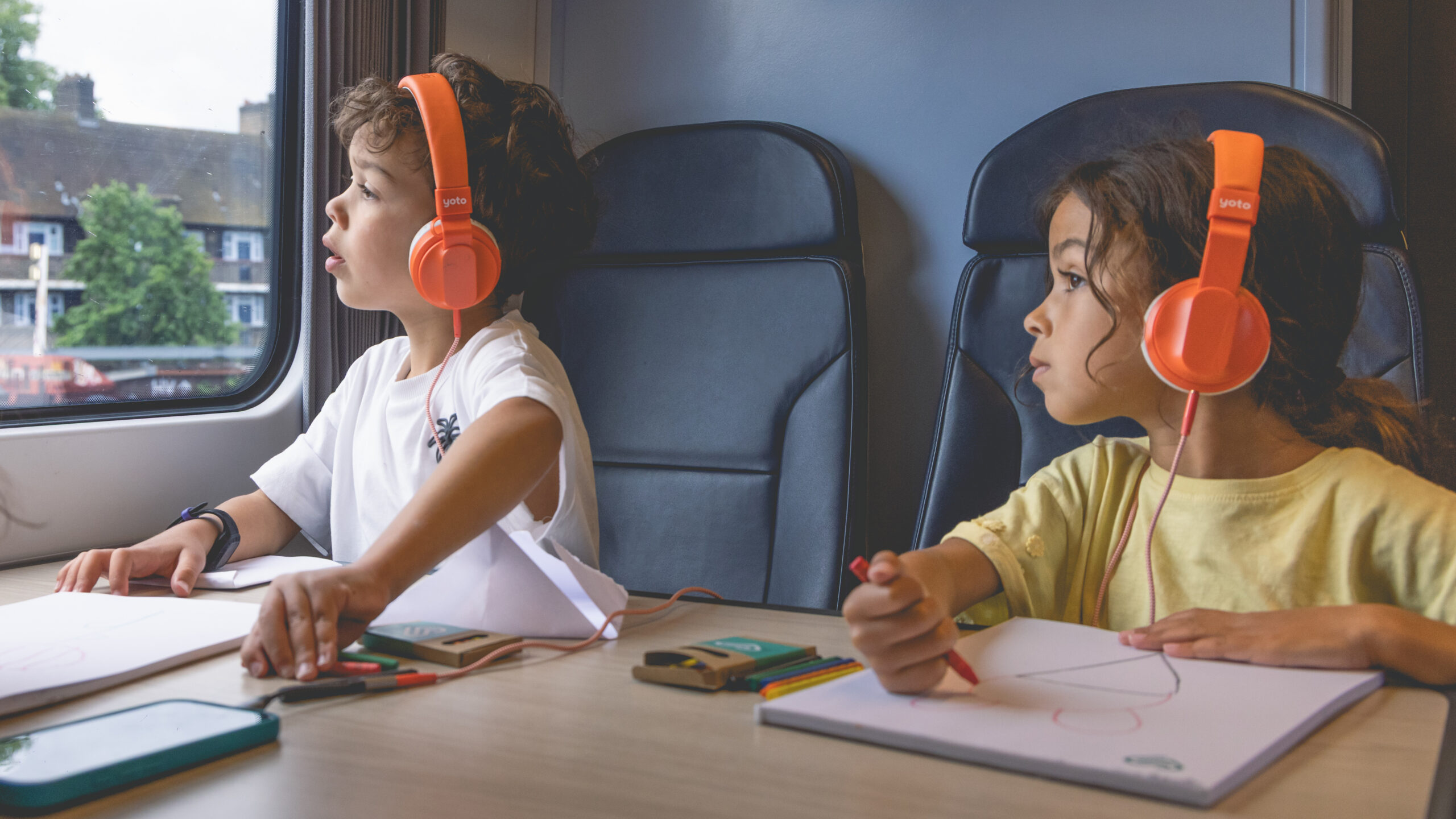
According to Jeffers, there’s really no wrong way to do it. A roof can become a hat. A cloud can become a whale. A red flower flashing past the train window can become the beginning of an entirely new world. As he tells Mini, “The mistakes are usually where the imagination gets in.”
We caught up with Jeffers to talk about raising creative kids, his surprisingly simple advice for parents who don’t consider themselves creative, how his unmistakable illustration style evolved, the phenomenon of The Day the Crayons Quit, and why some of the best ideas happen when we stop trying so hard to find them.
Oliver Jeffers on Travel, Drawing, and Screen-Free Creativity
You recently partnered with Trainline and Yoto on a collection of travel-inspired draw-alongs. Why do you think travel has such a unique way of inspiring creativity?
Travel is good at interrupting your usual sights, throwing new and unfamiliar shapes, sounds and landscapes at you and prompting your brain to make stories out of them. That’s what I love about the Yoto Daily Draw Along with Trainline— it gives children a starting point, while leaving enough room for the journey. Plus, rail travel is the perfect backdrop for budding artists, with the landscape continually changing outside the window. In fact, research from Trainline found that almost half of parents encourage their children to observe what is outside the train window to keep them occupied.
Many parents reach for screens while traveling (understandably!). What are some of your favorite simple, screen-free ways to keep kids entertained between stops?
Screens have their place while traveling, but we like to travel with some things like a simple pack of cards, or games, which is why the Yoto App and the Daily Draw Along with Trainline are so great. I also ask kids to grab a pencil and paper and choose one thing they see outside the window to draw, like a roof. With a little creativity, a roof can become a hat and a cloud can become a whale, and suddenly the travel time between stops has a plot. Beyond being a great way to entertain kids while traveling, Trainline research found that the vast majority of parents find creative activities like drawing make in-between moments of travel more enjoyable for children.
Whether you’re sketching on a train or traveling with your family, what are your creative travel essentials? Do you have any must-pack tools or routines that help inspiration strike on the go?
Once I use Trainline to sort the route and tickets, I pack my creative kit. It’s small— a notebook and pencils, an eraser and a sharpener. Maybe a couple of color pencils. My usual routine is to look out the window until something intriguing catches my eye to use as a starting point. I’ve also been queuing up the Yoto Daily Draw Along with Trainline for the family via the Yoto app.
If a child opens a sketchbook while traveling and says, “I don’t know what to draw,” what’s your favorite prompt to help get their imagination started?
Often my answer to this is “draw your hand holding the pencil” and by the time you’ve done that, draw what is coming out of the pencil. But when we are traveling, I can suggest they draw the last thing that flashed past the window. It can be as simple as a red flower and there’s no such thing as giving a wrong answer. The mistakes are usually where the imagination gets in.
You’ve said that “creativity often starts with simply looking closely.” In a world that’s constantly moving, how can parents help children slow down and become better observers of the world around them?
Well, the world is constantly moving on a train. I like giving children one small thing to become the expert on— chimneys, clouds, hats, whatever catches their eye. Attention is easier when it feels like a private mission and a train is wonderfully helpful because kids can see so much outside the window with the world flashing by.

Oliver Jeffers on Raising Creative Kids
For parents who don’t consider themselves particularly creative, what advice would you give for nurturing creativity at home? Is there a simple activity, habit, or ritual you’d encourage them to make part of everyday life?
Creativity is more about presence and practice than about quality. It’s about really being yourself and letting whatever is in your head out. There is no right or wrong. Or even good or bad. There are people who simply do it more and are more free with themselves. I think drawing whatever comes into your head on a large roll of brown paper can be a good place to start. No correcting or editing. Just adding to it.
Five minutes at the table, with no correcting and no need for a masterpiece, is enough to show that creativity is a habit rather than a talent you wait to acquire.
Your illustration style is instantly recognizable. How has your creative process evolved over the years and where do your ideas usually begin?
When people ask me how to find their style of art making, I remind them that you don’t find it. It finds you. When you get out of the way of your hand, all the wobbles and bumps that are imperfections become your style when you lean into them. Ideas usually begin with a vague feeling, whether that becomes a story or a color combination depends on what happens when I start trying to extract it from my head.
Your books often spark big conversations while remaining wonderfully playful. How do you balance creating stories that connect with both children and their parents?
I think this is a by-product of me being my own target audience. I’m fortunate enough to still remember how the world felt as a small child and can reel in some of those memories; I’m old enough to be curious about how we repair or improve the things that clearly don’t work for us as a species and I’m naive enough to try to convey them into simple artworks or narratives that might help things be better. If I can explain a concept to my daughter, who is 8, or my father, who is 80, and they are both equally there with me, I think I’ve done my job well.
AMAZON
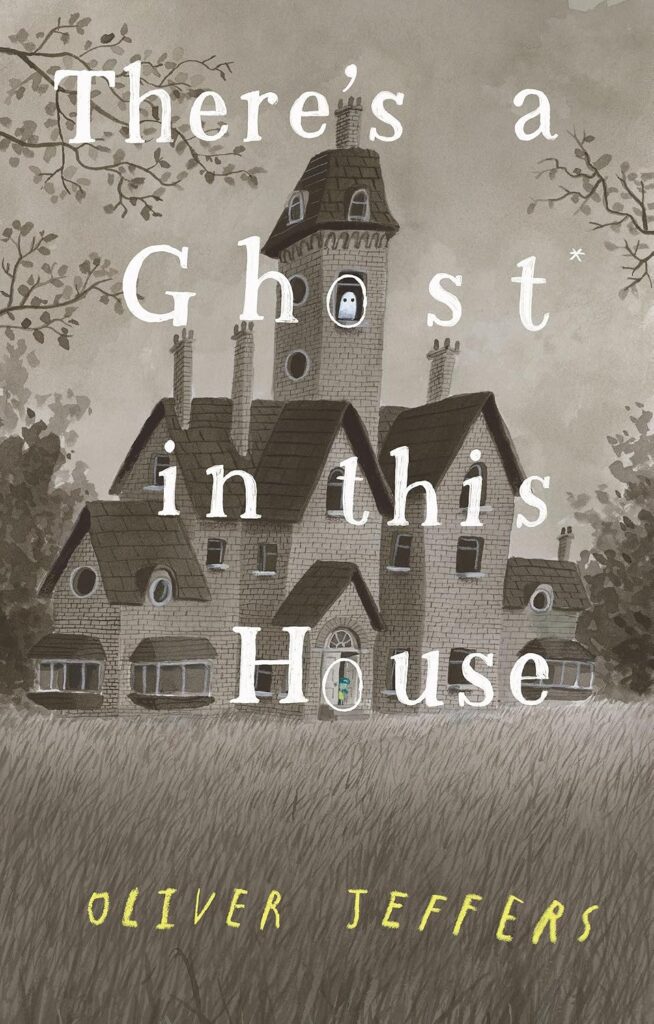
There’s a Ghost in This House
On Art, Storytelling, and Finding His Style
The Day the Crayons Quit has become such a beloved modern classic. Did you ever imagine it would resonate with so many families around the world?
I knew the book would be popular when I first read the script, given its simplicity, the art of letter writing as a form of protest, and its unique approach to basic color theory, but had no notion of just how popular it would become. It hit a sweet spot at the right time.
The draw-alongs encourage families to create together. How are you fostering a love of art, storytelling, or creativity with your own children?
I try not to make creativity feel like a lesson in our house. It’s often a pencil left on the table, a story begun in the middle, or one of us drawing a shape for everyone else to turn into something impossible. The Yoto Daily Draw Along with Trainline works in much the same way as it gives us somewhere to begin and then I get to watch my children take the idea somewhere I never would have thought to go.
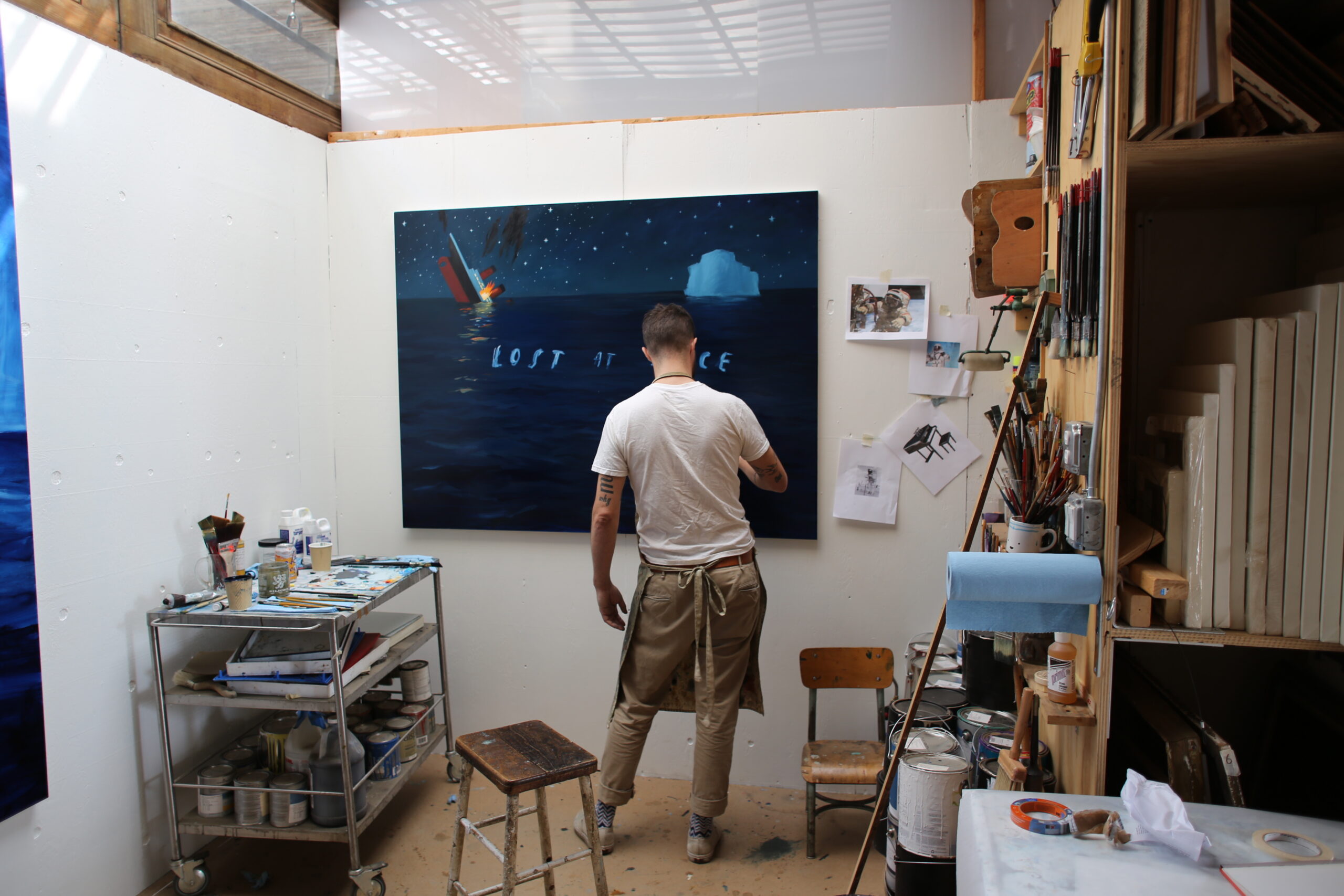
You’ve written and illustrated so many beloved books over the years. Is there one project that challenged you—or perhaps surprised you—the most creatively?
Yes! There’s a Ghost in This House was technically SO difficult to make. From working out how the tracing paper folded into the structure of the book and adapting the story around those moments, to lining up the ghost art with the scene in a way that didn’t impede the writing, to finding the right images from old furniture catalogs of empty rooms, it was by far the most challenging book I’ve ever made.
After creating so many beloved books, what continues to inspire you creatively? Is there a story or idea you still hope to bring to life one day?
Yes, I still have a few story concepts up my sleeve that I want to explore. Ideas can be funny like that sometimes. When you try to find them directly, they can be quite elusive. It’s often when you’re doing something else that they invite you in. Travel can be like that too and consistently inspires me creatively. When you have a set agenda of things to see, it can feel quite regimented and the ‘joy’ of travel seems to hide from you a bit. But when you just go where the wind or the mood or the momentum is taking you, the most joyous travel moments are usually the ones you least expect. The moral here is to be at one with the flow of life.
What do you hope children—and perhaps their parents, too—take away after spending time with one of your books?
It really depends on the book. But I hope to sprinkle a little beauty, joy and curiosity into the minds of everyone reading them. For some of the books, I hope the additional elements of care and responsibility for the world around us, whether local or global, are implemented in those minds too.
Finally, if you could leave aspiring young artists with one piece of advice, what would it be?
Stop caring what other people think of your art. The best art never looks like a carbon copy of the thing it is trying to represent and it is in all the imperfections that we find all the charm and accessibility.

Rapid Fire with Oliver Jeffers
Train ride or road trip? Train ride!
Window seat or aisle? Window
Coffee or tea? Coffee
Pencil or paint? Pencil
Mountains or ocean? Ocean
Fiction or nonfiction? Nonfiction
Museum or bookstore? Museum
Morning person or night owl? Night Owl
Favorite art supply you can’t live without? Paper
Favorite place you’ve ever traveled? France
Favorite children’s book (besides your own)? The Grouchy Ladybug by Eric Carle
Favorite way to spend a day off with your family? Walking, cooking, and playing
If you weren’t an author and illustrator, what do you think you’d be? Unemployed
AMAZON
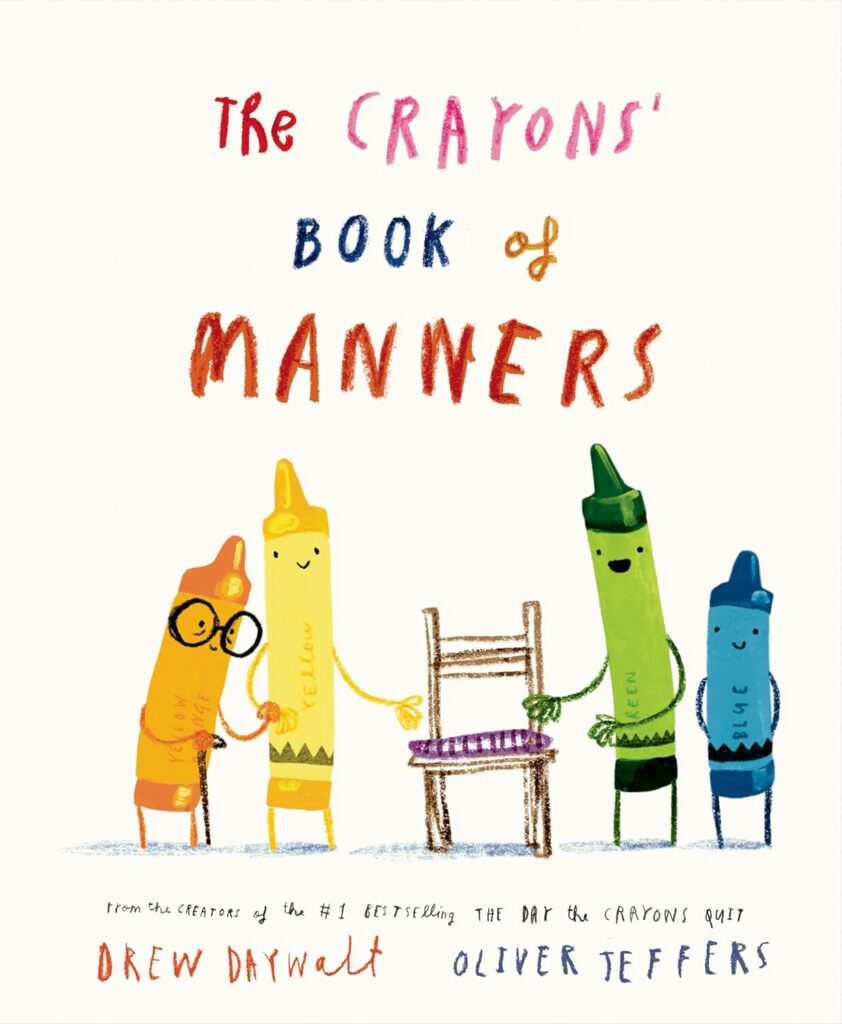
The Crayons’ Book of Manners
AMAZON
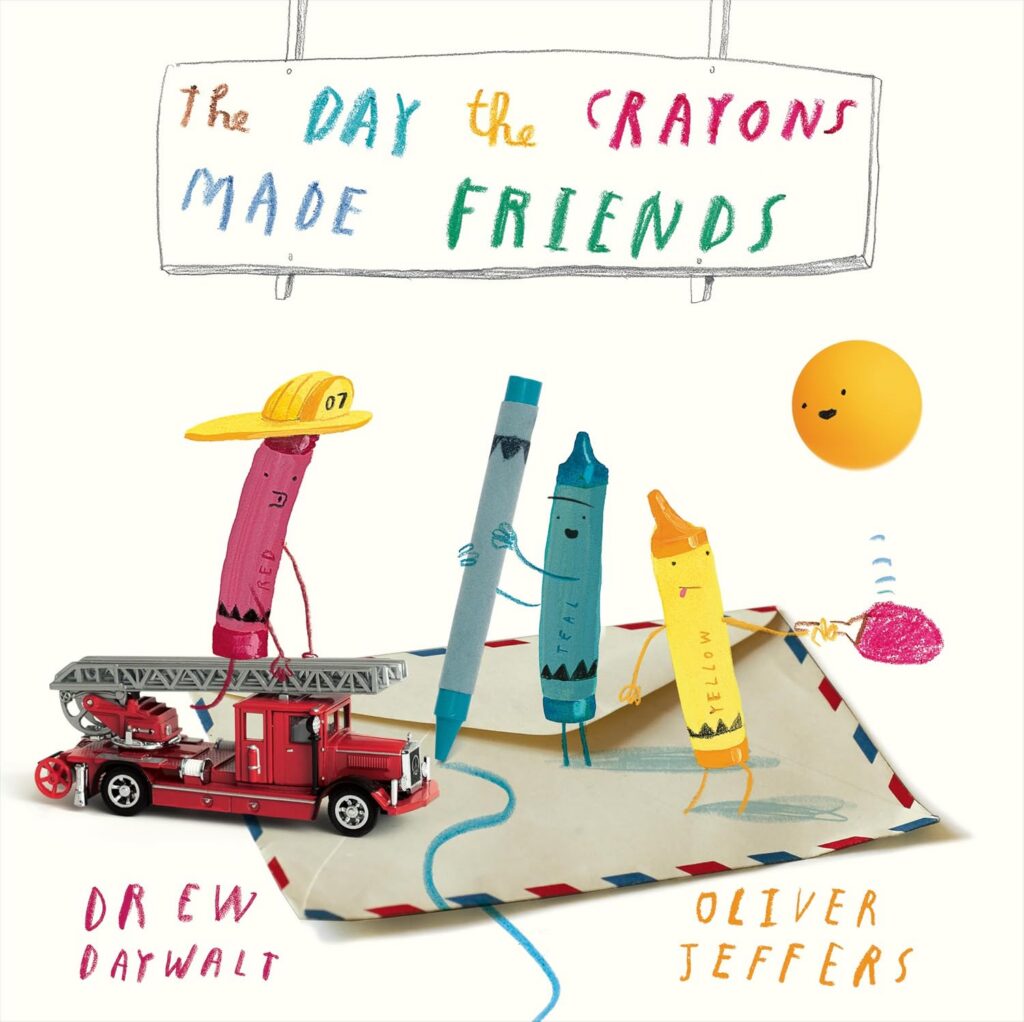
The Day the Crayons Made Friends

This post contains affiliate links. When you buy through links on our site, we may earn a commission at no extra cost to you.